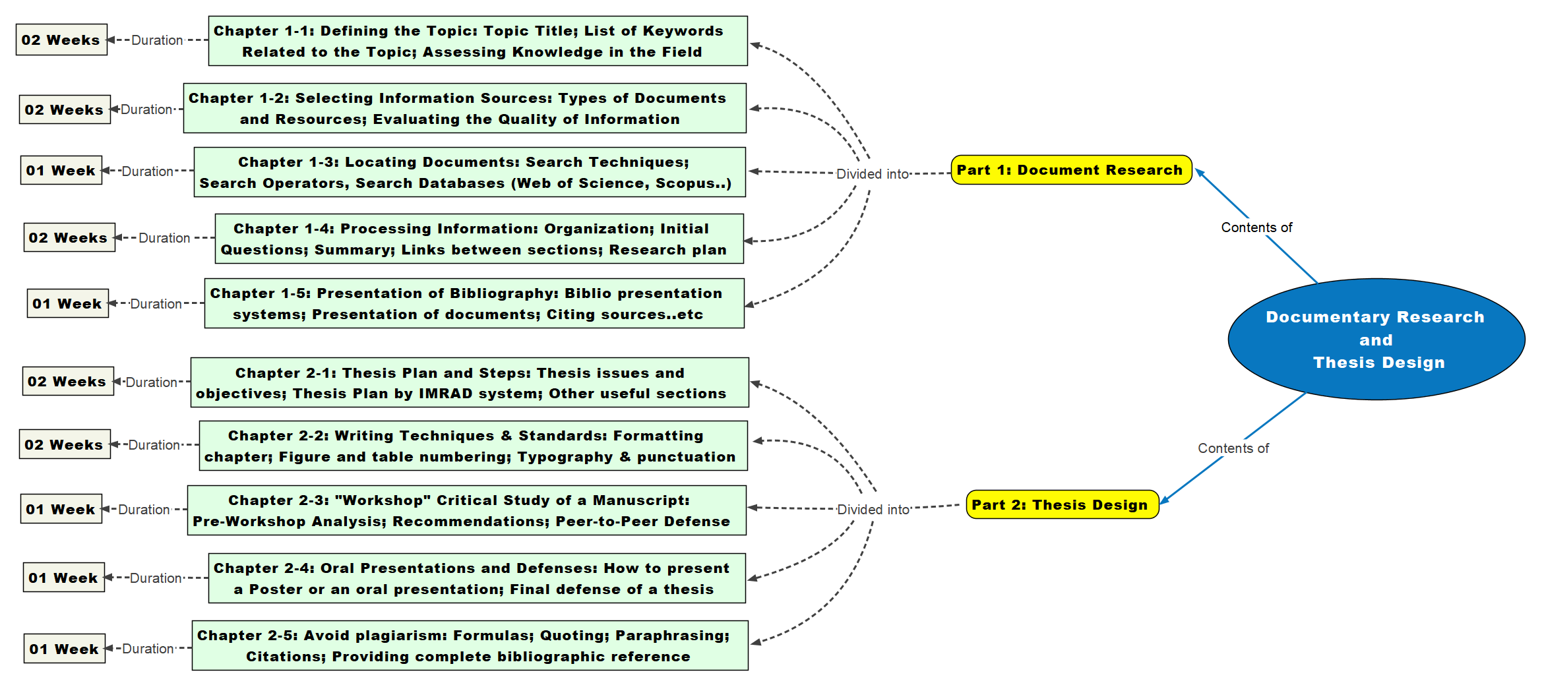
Upon completion of the learning experience offered by this course, the student will be able to:
In terms of knowledge:
- Identify the main concepts and definitions of literature review and thesis design.
- Describe the different types of scientific documents.
In terms of understanding:
- Explain the differences between the various types of documents (dissertations, theses, articles, posters, etc.).
- Distinguish between the fundamental principles of the final project, namely theses and patents in the academic context, and startups and micro-enterprises in the economic context.
In terms of application:
- Apply knowledge of literature research and thesis design by utilizing previous research, proposing both conventional and artificial intelligence-based solutions, while drawing upon the principles and methods covered in the course.
- Emphasize the importance of communication and teach students how to present their work in a professional, rigorous, and informative manner.
In terms of analysis:
- Analyze the different dimensions of literature research by examining the links between scientific, practical, analytical, writing, discussion, and conclusion aspects.
- Compare different types of documents using scientific research databases and theses from previous years via specialized search engines, and identify their structural elements as well as their strengths and weaknesses.
In terms of synthesis:
- Synthesize the results of academic research to formulate scientific and practical recommendations for preparing final-year projects.
In terms of evaluation:
- Critically evaluate, gather valuable information, and effectively apply it in their final projects.
- Navigate the various steps leading to writing a scientific document.