اللغة الانجليزية
Topic outline
-
01
University
Mohamed Seddik Benyahia, Jijel
02
Faculty
Political Science Department
03
Department
Political Science
04
Year
(2025-2026)
05
Target Group
Third Year, bachelor degree, organization
06
The Course
English
07
Unit
Horizantal Unit
08
Weekly Range
One hour half/ week
09
Semester Range
14 weeks
10
Coefficient
4
11
Course Timing, Hybrid form
Online classes Every Sunday (14:00- 15:30)
12
Lecturer in charge
Dr. Faouzia ZERAOULIA
13
Contact information of lecturer in charge
zeraoulia-faouzia@univ-jijel.dz
https://scholar.google.fr/citations?user=barfLUIAAAAJ&hl=fr -
1- The Organizational Communication
2- Human Resources Management and Human Resources Development
3- Political Parties and Democracies
4- Public Policy
5- Public Administration
6- Local Governance
7- Public Leadership
8- Ethics and Accountability in Public Service -
First: Communication and Professional Skills
These objectives focus on the practical application of English in a public sector context.
Professional Communication: Students will be able to produce and interpret professional written and spoken English in common public administration contexts, such as drafting official correspondence, writing memos, and participating in formal meetings.
Presentation Skills: Students will be able to deliver clear, well-structured presentations on policy issues, organizational proposals, and public service projects, utilizing appropriate academic and technical vocabulary.
Intercultural Competence: Students will be able to communicate effectively and appropriately with international colleagues, stakeholders, and the public, demonstrating awareness of varied cultural communication styles in an English-speaking environment.*
These objectives ensure students can access and utilize key resources in English.Specialized Vocabulary: Students will be able to recognize and correctly use core English terminology related to public policy, governance, organizational theory, public finance, and international affairs.
Policy Comprehension: Students will be able to read, critically analyze, and summarize complex English-language documents, including international treaties, policy papers, organizational reports (e.g., UN, OECD, World Bank), and academic journals in their field.
Documentation: Students will be able to draft clear, concise, and grammatically accurate official documents, reports, and project proposals that adhere to standard professional formats.
Third: Analytical and Critical Thinking:
These objectives connect language skills to higher-order professional functions.
Debate and Negotiation: Students will be able to participate in constructive English-language discussions, debates, and simulated negotiations related to controversial administrative issues, articulating and defending their stance logically and respectfully.
- Information Synthesis: Students will be able to synthesize information from multiple English sources to formulate well-supported arguments and recommendations for administrative action.
-
The first course was an onsite session designed to introduce students of Public Administration and Organization to the main components of their English course. During this session, students learned about the topics they will study throughout the semester, including key public administration concepts, leadership vocabulary, and communication skills needed in professional government settings. I explained the course objectives, the types of activities students will complete, and the importance of English for understanding administrative terms, writing reports, and participating in discussions. This introductory meeting helped students understand what to expect, feel prepared for the course, and recognize how English supports their future studies and careers in the public sector.
-
-
Meeting Room
Dimanche, 05 octobre · De 14:00 à 15:30 pm
Fuseau horaire : Africa/Algiers
Informations de connexion Google Meet
Lien de l'appel vidéo : https://meet.google.com/spx-uiug-dap
-
The lecture File
Main Objectives:
Define organizational communication and explain its role within an organization.
Understand the importance of effective communication in creating mutual understanding and cooperation among organizational members.
Explain how organizational communication climate influences employee behavior, job satisfaction, and performance.
Identify factors that affect organizational climate, including culture, values, norms, and communication patterns.
Describe the relationship between communication, organizational culture, and employee engagement
-
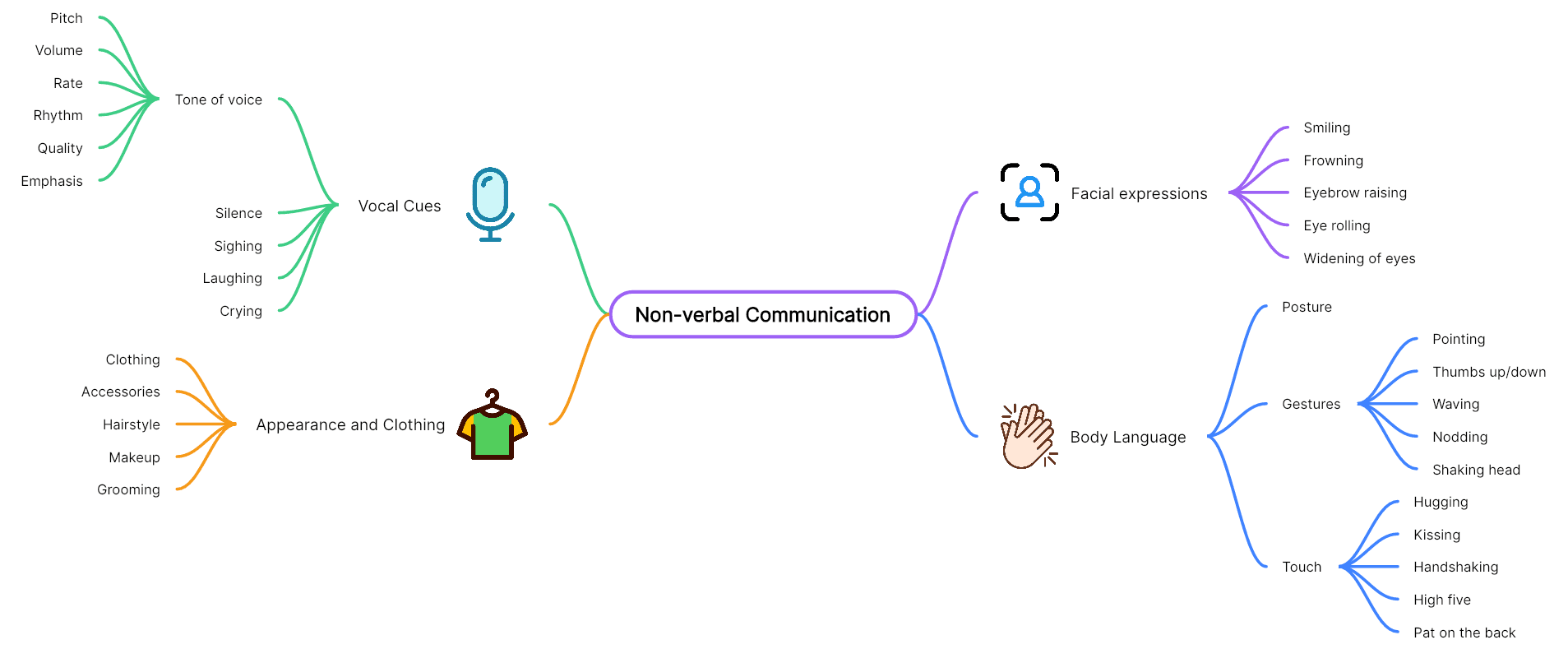
Cognitive Map Lesson
-
Homework AssignmentOpened: Monday, 27 October 2025, 12:00 AM
-
-
-
Political Parties and Democracies Meeting Room
Dimanche, 12 octobre · De 14:00 à 15:30 pm
Dimanche, 19 octobre · De 14:00 à 15:30 pm
Fuseau horaire : Africa/Algiers
Informations de connexion Google Meet
Lien de l'appel vidéo : https://meet.google.com/spx-uiug-dap
-
Lecture File
-
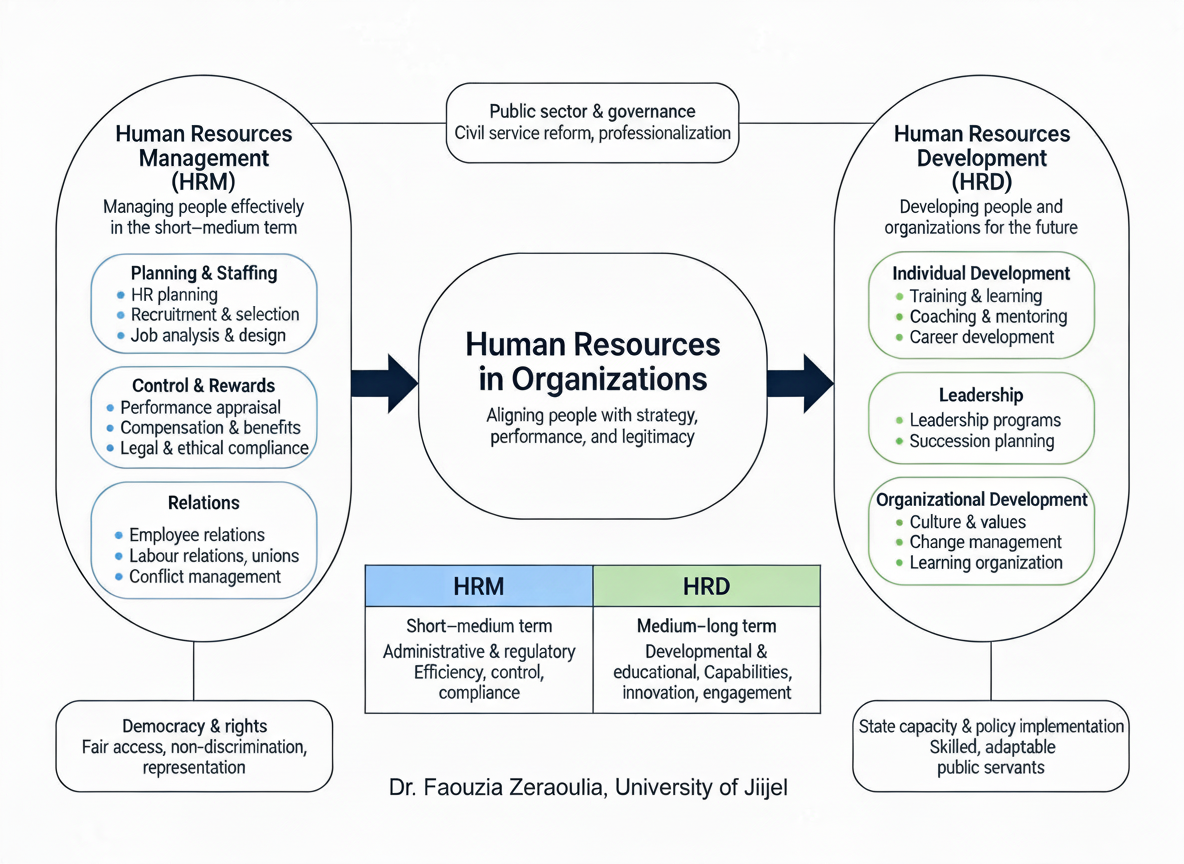
Cognitive Map Lesson
-
Homework AssignmentOpened: Saturday, 1 November 2025, 12:00 AM
Answer the following questions based on the lecture content:
- When and where did the history of Human Resource Management begin?
- How did the Industrial Revolution influence the development of HRM?
- Why did organizations begin using the term Human Resource Management after the 1980s?
- What are the main functions of HRM according to the definition provided in the text?
- When and where did Human Resource Development first emerge?
- How did the Ford Motor Company contribute to the development of HRD?
- Why was World War II an important period for HRD development?
- When was the term HRD officially introduced?
- Why did the American Society for Training and Development (ASTD) support HRD in the 1980s?
- What skills were added to HRD during this period?
- Why did organizations begin to see employees as important assets
- How did HRD develop in the UK during World War II?
- Why was training important during this period?
- Why is HRD considered an important business strategy today?
- How is HRD defined in terms of training activities?
- According to Werner and Harris, what is the purpose of HRD?
- How was HRD traditionally related to HRM?
-
-
-
Political Parties and Democracies Meeting Room
Dimanche, 26 octobre · De 14:00 à 15:30 pm
Fuseau horaire : Africa/Algiers
Informations de connexion Google Meet
Lien de l'appel vidéo : https://meet.google.com/spx-uiug-dap
-
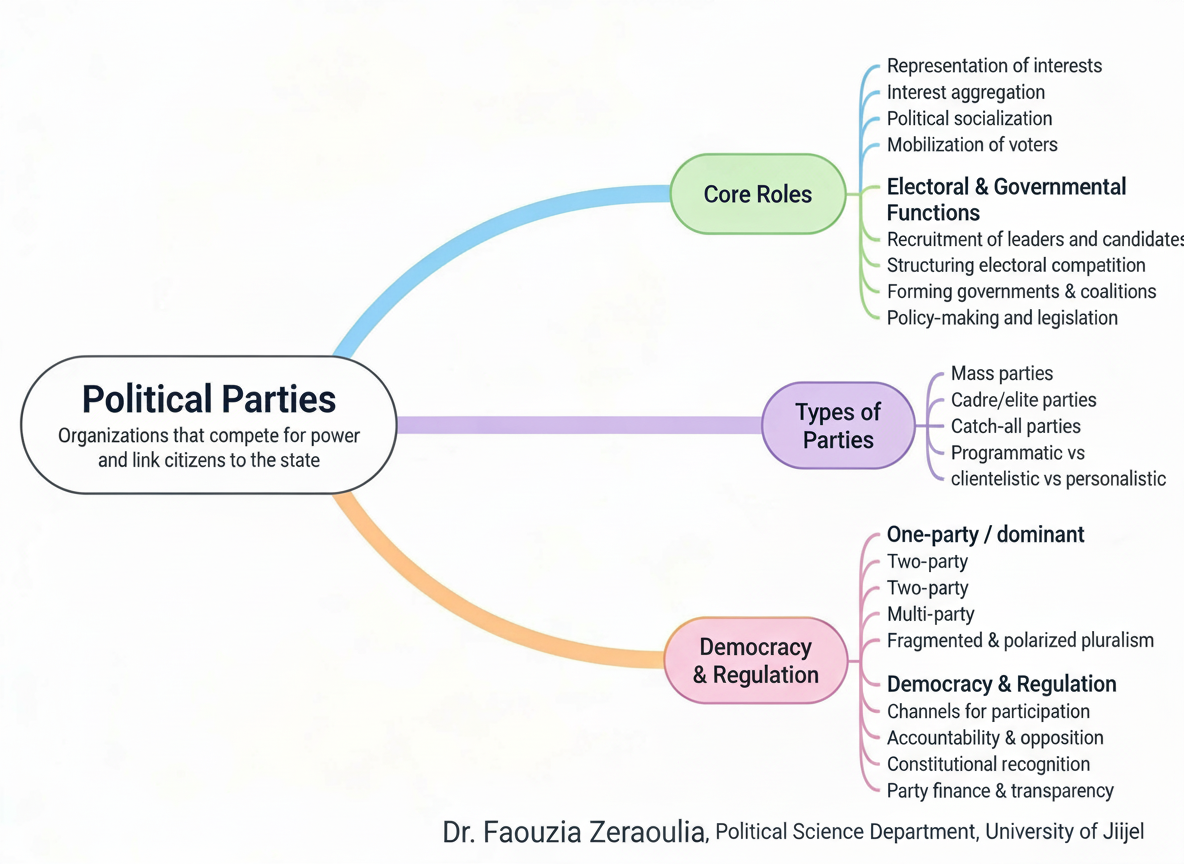
Lesson 01: Political parties and democracies File
-
Cognitive Map Lesson
-
Quiz: Political parties and democracies Interactive Content
-
Political Parties: Activity 01 AssignmentOpened: Friday, 7 November 2025, 12:00 AMDue: Sunday, 14 December 2025, 12:00 AM
Answer the following questions based on the text that we explained during the lesson:
What problem can arise when political divisions are too strong?
How do regional or local parties differ from national political parties?
In what ways has modern technology changed the role of political parties?
Why is transparency important for political parties?
-
-
-
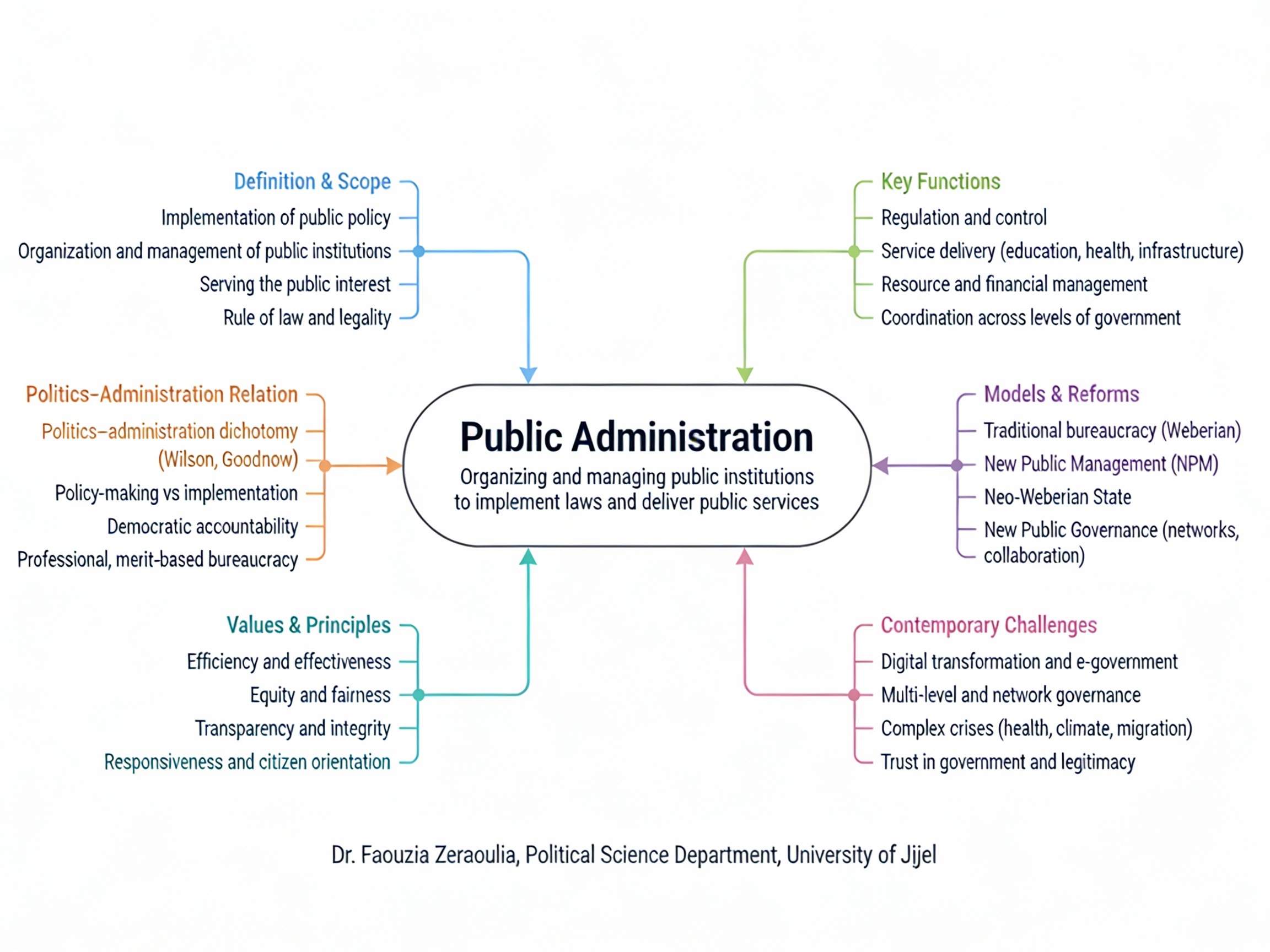
Public Administration Meeting Room
Dimanche, 02 November· De 14:00 à 15:30pm
Fuseau horaire : Africa/Algiers
Informations de connexion Google Meet
Lien de l'appel vidéo : https://meet.google.com/spx-uiug-dap
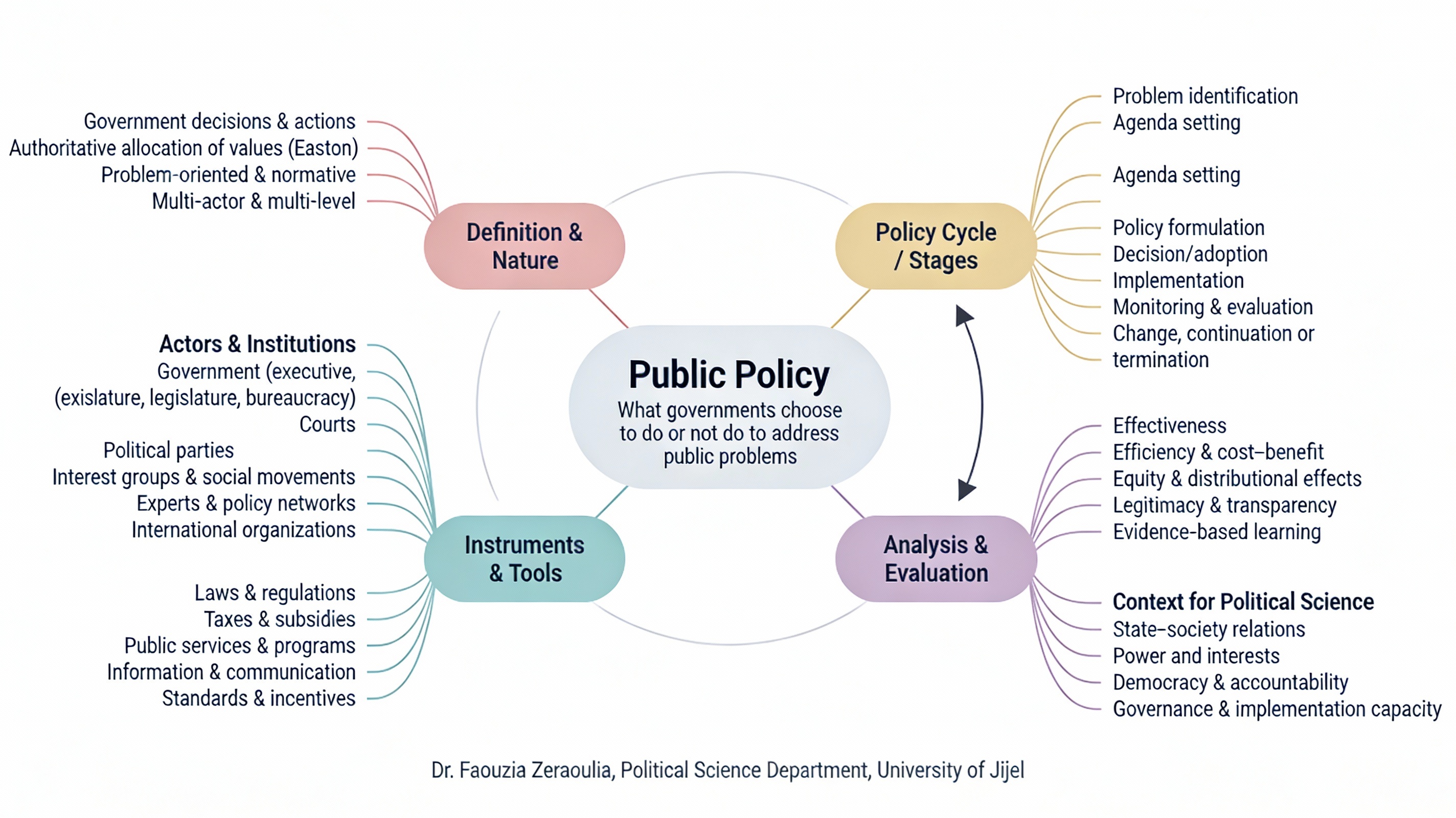
-
Lecture File
-
Public Policy activity 01 AssignmentOpened: Saturday, 8 November 2025, 12:00 AMDue: Monday, 15 December 2025, 12:00 AM
Why is public policy considered both an action and a form of inaction?
- How do the different components of public policy relate to one another?
- Why is policy evaluation an important part of the public policy process?
- How do values and ideologies influence public policy decisions?
-
Quiz: Public Policy activity Interactive Content
-
-
-
Public Administration Meeting Room
Dimanche, 9 Novembre · De 14:00 à 15:30 pm
Dimanche, 16 Novembre · De 14:00 à 15:30 pm
Fuseau horaire : Africa/Algiers
Informations de connexion Google Meet
Lien de l'appel vidéo : https://meet.google.com/spx-uiug-dap
-
Cognitive Map Lesson
-
Quiz: Public Administration Interactive Content
-
Homework AssignmentOpened: Saturday, 29 November 2025, 12:00 AMDue: Tuesday, 6 January 2026, 12:00 AM
Answer the following questions:
- What is the main role of public administration in modern governance ?
- How does public administration act as the “engine room of government”?
- According to the text, what are the two dimensions of public administration as a field of study and practice?
- How does public administration contribute to the delivery of public services?
- How did Woodrow Wilson (1887) define public administration?
- What is the meaning of the politics–administration dichotomy introduced by Wilson?
- How did Leonard D. White (1926) define public administration
- What were Dwight Waldo’s (1948) main arguments about the nature of public administration?
-
-
-
Local Governance
Dimanche, 23 novembre · De 3:30 à 5:00pm
Dimanche, 30 novembre · De 3:30 à 5:00pm
Fuseau horaire : Africa/Algiers
Informations de connexion Google Meet
Lien de l'appel vidéo : https://meet.google.com/spx-uiug-dap
-
-
-
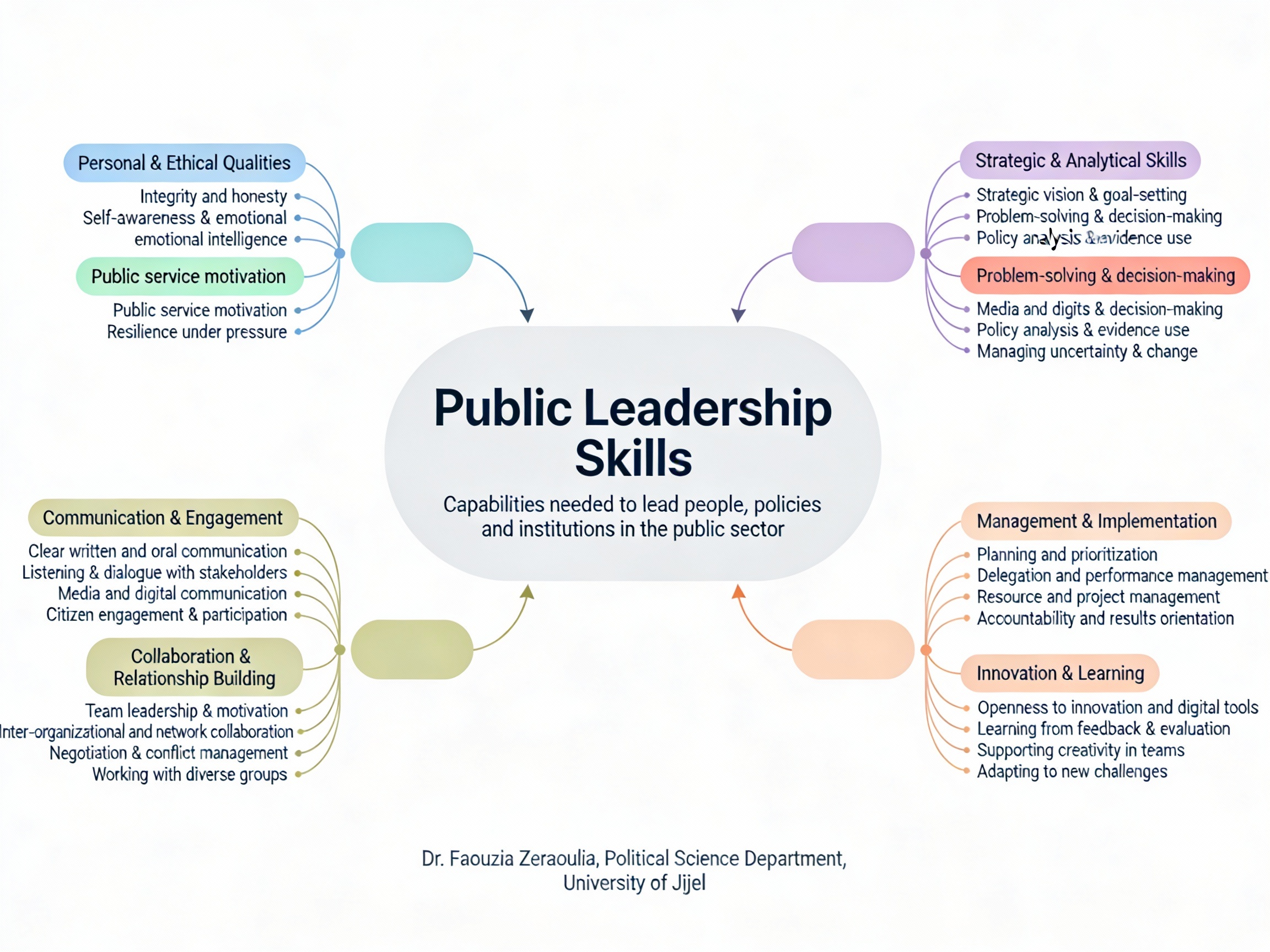
Public Leadership Lesson
Dimanche, 07 December · De 14:00 à 15:30 pm
Fuseau horaire : Africa/Algiers
Informations de connexion Google Meet
Lien de l'appel vidéo : https://meet.google.com/qdt-jwnp-ryr
-
Lecture File
-
Cognitive Map Lesson
-
Interactive Exercise Interactive Content
-
Opened: Saturday, 29 November 2025, 12:00 AMDue: Tuesday, 6 January 2026, 12:00 AM
Answer the following questions from the previous lecture:
-
What makes public leadership a unique form of leadership?
- Why is accountability considered the most important value in the public sector?
- How does accountability leadership differ between public and private organizations?
- What is rule-following leadership, and why is it essential in public administration?
- How do public leaders encourage employees to adhere to governmental rules and regulations?
- Why is the relationship between politicians and civil servants described as a principal–agent relationship?
- What is network governance leadership, and why is it important for public organizations working in collaborative networks?
-
-
-
-
-
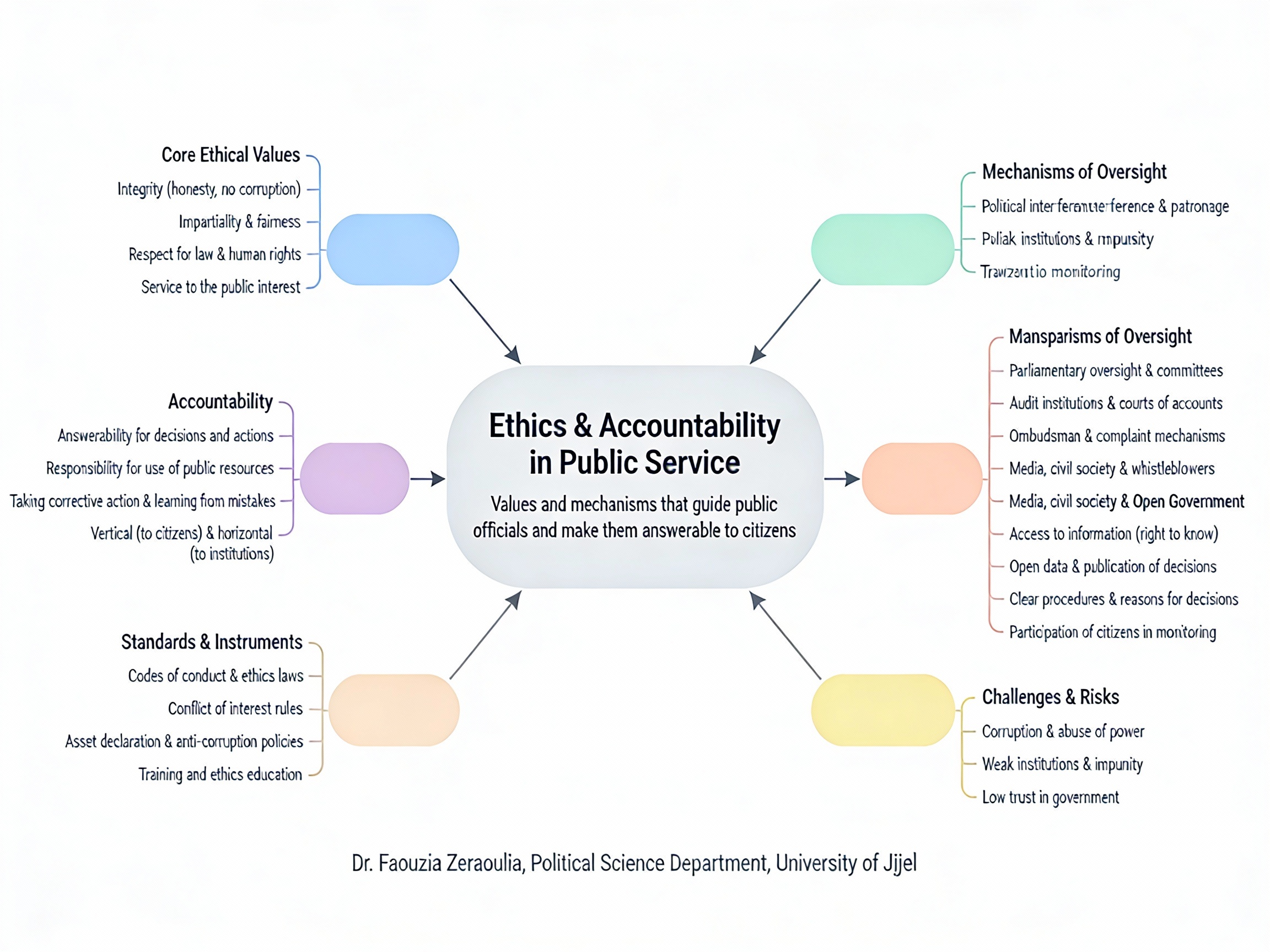
Ethics and Accountability
Dimanche, 14 December · De 14:00 à 15:30 pm
Dimanche, 21 December · De 14:00 à 15:30 pm
Fuseau horaire : Africa/Algiers
Informations de connexion Google Meet
Lien de l'appel vidéo : https://meet.google.com/qdt-jwnp-ryr
-
-
-
-
-
-
-
-
-
-
-
-
-
-
-
-
-
-
-
-
-
-
-
-
-
-
-
-
-