Recherche documentaire et conception de mémoire
Aperçu des sections
-
-
-

Instructor: Asst. Prof. Dr. Mostefa HANI
Contact information: Via email: mostefa.hani@univ-jijel.dz.
Via Telegram: The group is created during the first lesson.
Availability:
At the Professors' room: Sunday, Monday, from 11:00 A.M. to 14:00 P.M.
Forum response: Any questions related to the course must be posted on the dedicated forum so that everyone can benefit from my response. I commit to answering posted questions within 48 hours.
Email response: I commit to responding by email within 48 hours of receiving your message, except in unforeseen circumstances. Please note that the forum is the preferred communication channel. Email is reserved for emergencies (in case of platform access problems) and should be used judiciously.
-

Upon completion of the learning experience offered by this course, the student will be able to:
In terms of knowledge:
- Identify the main concepts and definitions of literature review and thesis design.
- Describe the different types of scientific documents.
In terms of understanding:
- Explain the differences between the various types of documents (dissertations, theses, articles, posters, etc.).
- Distinguish between the fundamental principles of the final project, namely theses and patents in the academic context, and startups and micro-enterprises in the economic context.
In terms of application:
- Apply knowledge of literature research and thesis design by utilizing previous research, proposing both conventional and artificial intelligence-based solutions, while drawing upon the principles and methods covered in the course.
- Emphasize the importance of communication and teach students how to present their work in a professional, rigorous, and informative manner.
In terms of analysis:
- Analyze the different dimensions of literature research by examining the links between scientific, practical, analytical, writing, discussion, and conclusion aspects.
- Compare different types of documents using scientific research databases and theses from previous years via specialized search engines, and identify their structural elements as well as their strengths and weaknesses.
In terms of synthesis:
- Synthesize the results of academic research to formulate scientific and practical recommendations for preparing final-year projects.
In terms of evaluation:
- Critically evaluate, gather valuable information, and effectively apply it in their final projects.
- Navigate the various steps leading to writing a scientific document.
-
As a fifth-year university student (Master 2) in science and technology, a curiosity and interest in scientific research methods and a respect for scientific ethics are strongly recommended. This will enable you to grasp the course content. In addition, the following are expected:
Basic prior knowledge of writing and presentation methodologies.
Basic knowledge of using conventional tools like Microsoft office or artificial intelligence to prepare and design documents, slides, etc.
Skills in reading and analyzing general documents.
Finally, an open mind and a willingness to explore new concepts and perspectives will be valuable assets for fully benefiting from the learning experience offered by this course.
-
The course "Documentary Research and Dissertation Design" offers an exciting first exploration of the complex field of scientific research. Designed specifically for Master 2 students, this course provides an immersion in the theoretical foundations, key concepts, and practices of preparing and presenting a final project and writing a poster or scientific article.
This course promotes an interactive pedagogical approach that integrates theoretical presentations (PowerPoint presentations), case studies (scientific documents), group discussions, and practical exercises such as quizzes, questions, Kahoot (an online learning platform), videos, etc. Students will have the opportunity to apply the concepts covered to concrete projects, such as Master 2 dissertations or previous articles. This will allow them to analyze, critique, and deconstruct these projects, enabling them to better understand the structure of a final-year project.
-
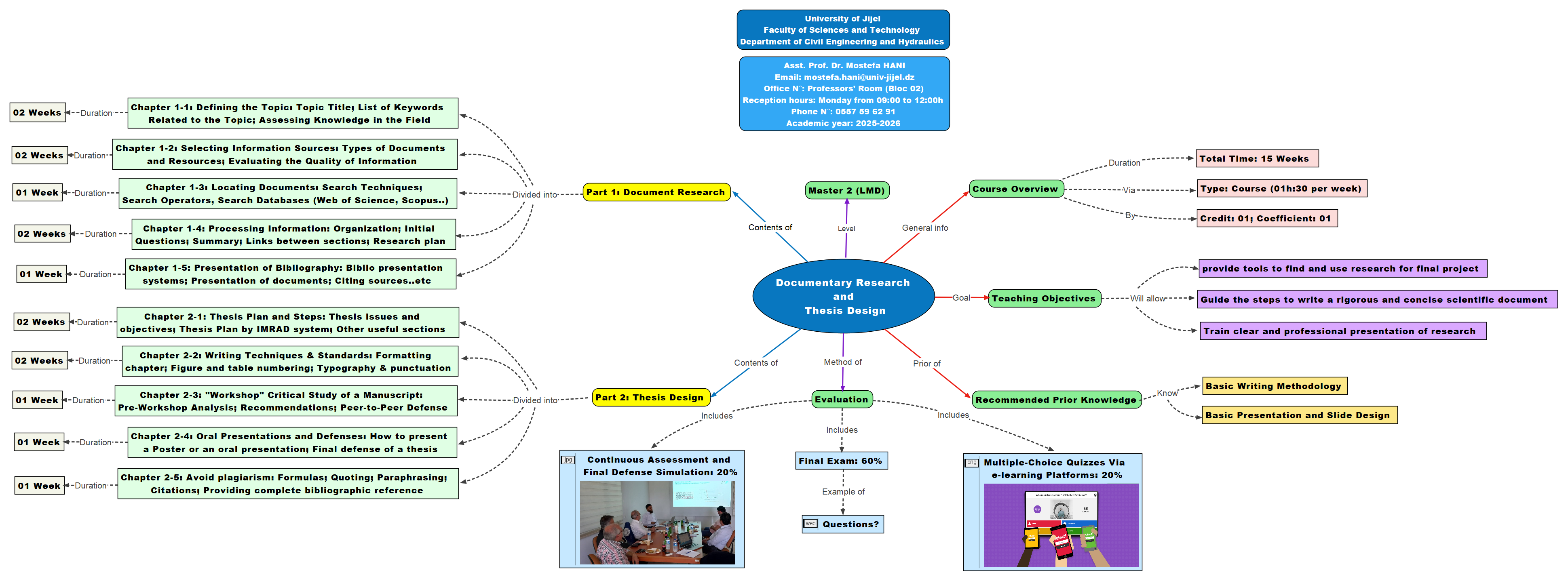
Structured in ten chapters, as illustrated in the mind map below, this course primarily aims to provide students with the necessary tools and fundamental knowledge to read, understand, and analyze essential resources. It will help them gather valuable information and apply it effectively in their final projects, navigate the various stages involved in writing a scientific paper, and emphasize the importance of communication, teaching them how to present their work rigorously and informatively.
-
-
-

-
-
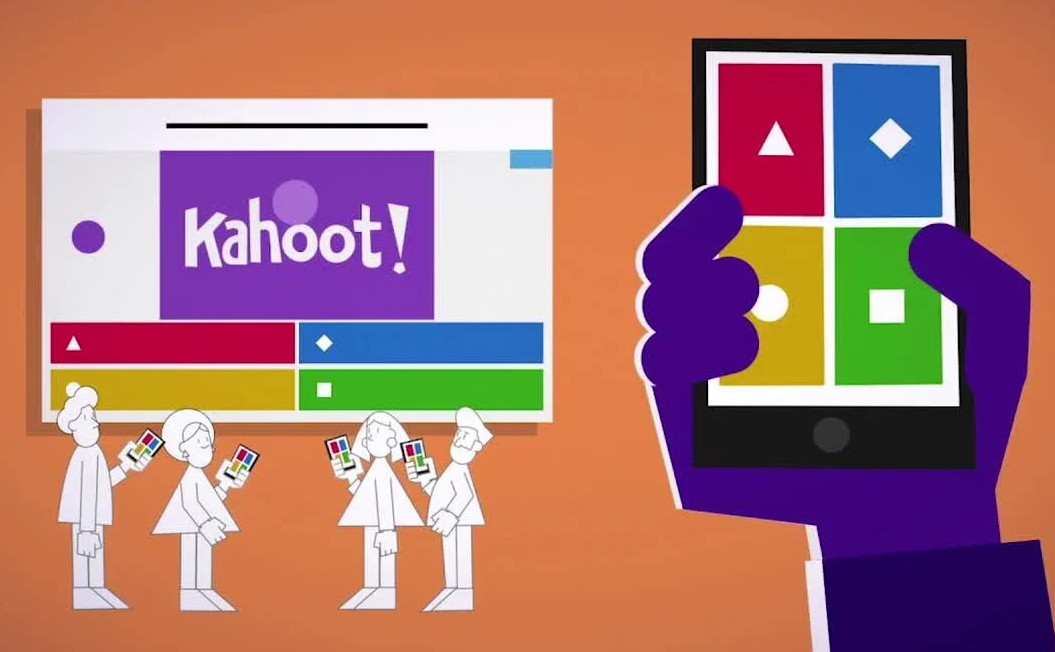
Kahoot! is an online learning platform. It features educational games, also known as "Kahoots!" which are multiple-choice quizzes, true/false questions, and other question types created by users and accessible via a web browser or the Kahoot! app.
Additionally, online courses are available, where instructors pose questions or provide information to students while simultaneously assessing their progress and ranking them.
-
-
-
Chat room for the module "Documentary Research and Thesis Design" (course) for Master 2 in Geotechnical Engineering, Hydraulics, Roads and Engineering Structures, and Structural Engineering.
-
-
-
Broad interest to sharp research question:
- How did you go from a broad interest to a sharp research question?
- What was the most significant challenge you faced in refining your thesis topic into a specific, researchable problem statement?
- What was your research question before, and what is your research question now?
- What specific methodology or feedback helped you to narrow it down?
-
-